
The question to settle first
Heat, dust and strong sun make observation useful, but local weather is not a diagnosis for every garage-door problem. A maintenance conversation should connect the conditions at your opening with the actual manufacturer instructions.
Begin with garage door maintenance & tune-ups when discussing this issue. This guide helps prepare that conversation.
Start at the threshold
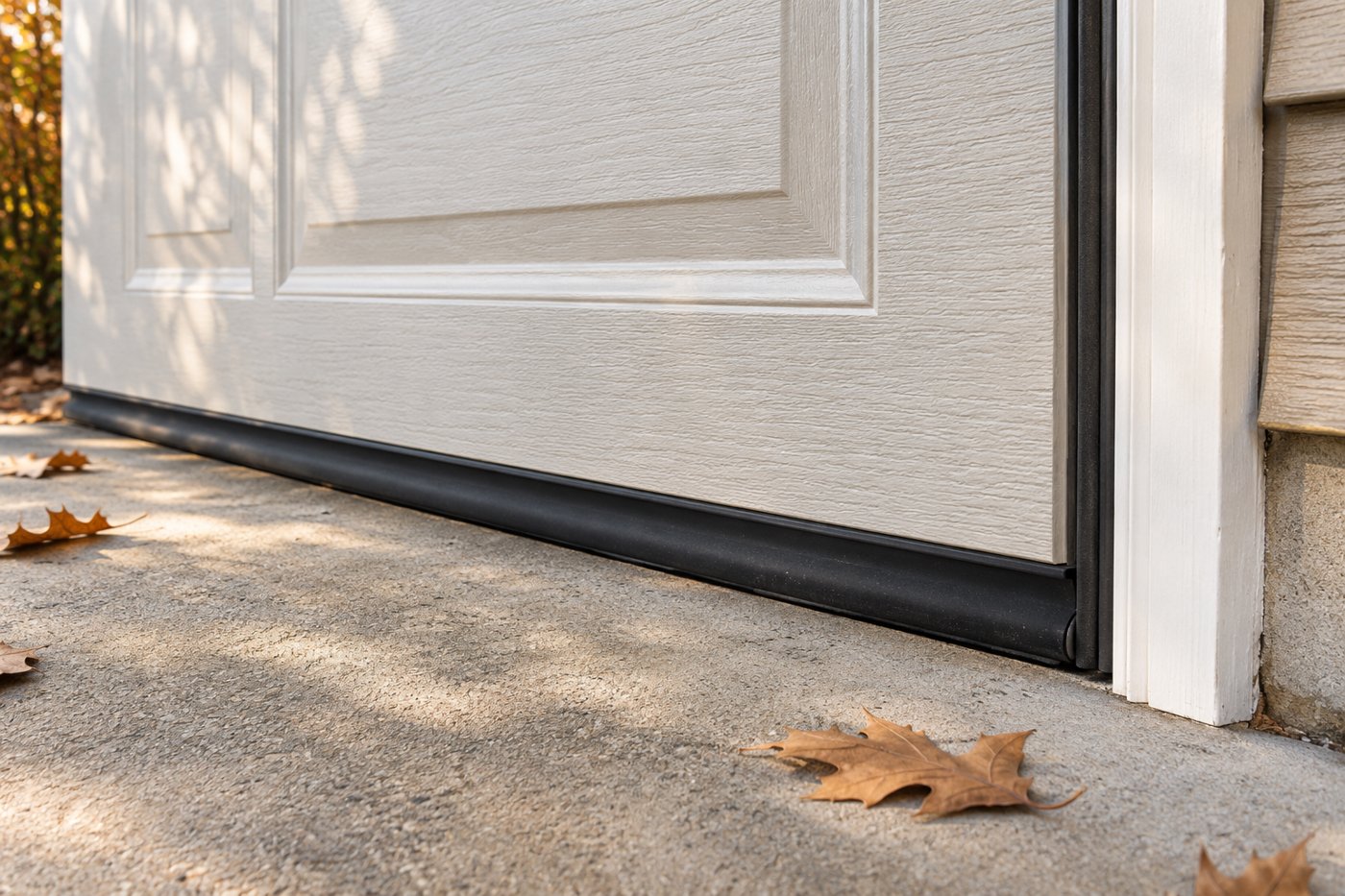
Look at the lower edge from a safe position while the door is fully closed. Debris, a hardened seal and an uneven slab can each leave a different gap. The door should not be forced down to conceal a fit problem. A replacement seal needs to match its retainer and the intended conditions.
Keep the approach clear without reaching under a moving door. If the door is stuck to the slab, do not use repeated motor cycles to pull it free. Stop and arrange the appropriate assessment instead of risking the upper section or drive.
Know what can be observed safely
| Observation | Information to keep |
|---|---|
| Daylight beneath one corner | Gap location and whether it changes |
| New scraping sound | Where in travel it occurs |
| Sensor light changes | Light state and time of day |
| Visible cable strands or loose hardware | Stop using the system; describe safely |
| Hardened or torn seal | Door model and accessible seal profile |
Do not loosen fasteners connected to the lifting system. A routine care task does not include adjusting springs, bottom brackets or cables. If you cannot tell what carries tension, leave it alone.
Use the actual manuals
Door and opener instructions describe approved products, inspection points and owner checks. General advice to grease every surface is unhelpful: lubricant in a track can collect debris, and the wrong product may affect some materials. Use the specified product only where the manufacturer permits it.
A maintenance visit can evaluate rollers, hinges, tracks, fasteners, balance and controls. It should distinguish wear from structural damage. Ask for the findings rather than an assurance that lubrication resolves all noise.
Treat seasonal patterns as evidence
Record whether a fault occurs only during morning cold, at a particular sun angle or after windblown debris. A repeated pattern can guide diagnosis, but it should not replace inspection. An older component can fail on a cold day without temperature being its sole cause.
For an attached garage, discuss rooms adjoining the opening, stored items and the way people enter. Product insulation, seals and the surrounding building affect comfort together. Do not assume one replacement component establishes the final interior temperature.
Return to a clear routine
Keep model information accessible and arrange follow-up for new rough travel. Safety checks belong to an otherwise sound system and should follow the manufacturer procedure. If a check fails, stop normal automatic use and seek correction.
A door that has become heavy, crooked or unstable needs repair assessment rather than another maintenance cycle. Keep people away, leave high-tension hardware untouched and describe the exact symptom during the call.
Applying this in Phoenix
In Phoenix and the supported surrounding ZIPs, note whether the opening faces strong afternoon sun and whether dust is present near the sensor path. Pinal-area coverage follows the exact ZIP list, so include the postal location at the beginning of the call.
Check the coverage directory and related service options. For a sudden heavy door, use the spring failure guide; for control symptoms, read sensor diagnosis.
Technical reading
DASMA garage-door system safety and CPSC opener safety guidance. Read the model-specific manual before any owner check.
A useful next step
Call with the door position, ZIP and observed symptom. Calls and repair requests are accepted 24/7; local scope and scheduling are confirmed by phone. Do not operate a visibly unstable door while gathering information.