
The question to settle first
Start an opener choice with the door, not a horsepower label. The door needs to be sound and correctly balanced. Then compare the available space, suitable drive layouts, controls and the household’s access needs.
Begin with garage door opener installation when discussing this issue. This guide helps prepare that conversation.
Check the mechanical system first
A motor should move a balanced door rather than lift its unsupported weight. Scraping, jerking or a heavy start needs inspection before a new opener is chosen. Ask for the door condition to be assessed independently of the electronic controls.
An opener upgrade will not correct bent tracks, incompatible springs or an unstable upper panel. The proposed operator must suit the door type and the manufacturer mounting requirements. Keep the door label and installation information if available.
Compare layouts with the opening in mind
| Layout | Useful question |
|---|---|
| Belt drive | Does the full installation suit the sound priorities? |
| Chain drive | Is the mounting and operating clearance appropriate? |
| Wall-mounted operator | Is the torsion arrangement and side clearance compatible? |
| Special low-clearance arrangement | What does the manufacturer permit? |
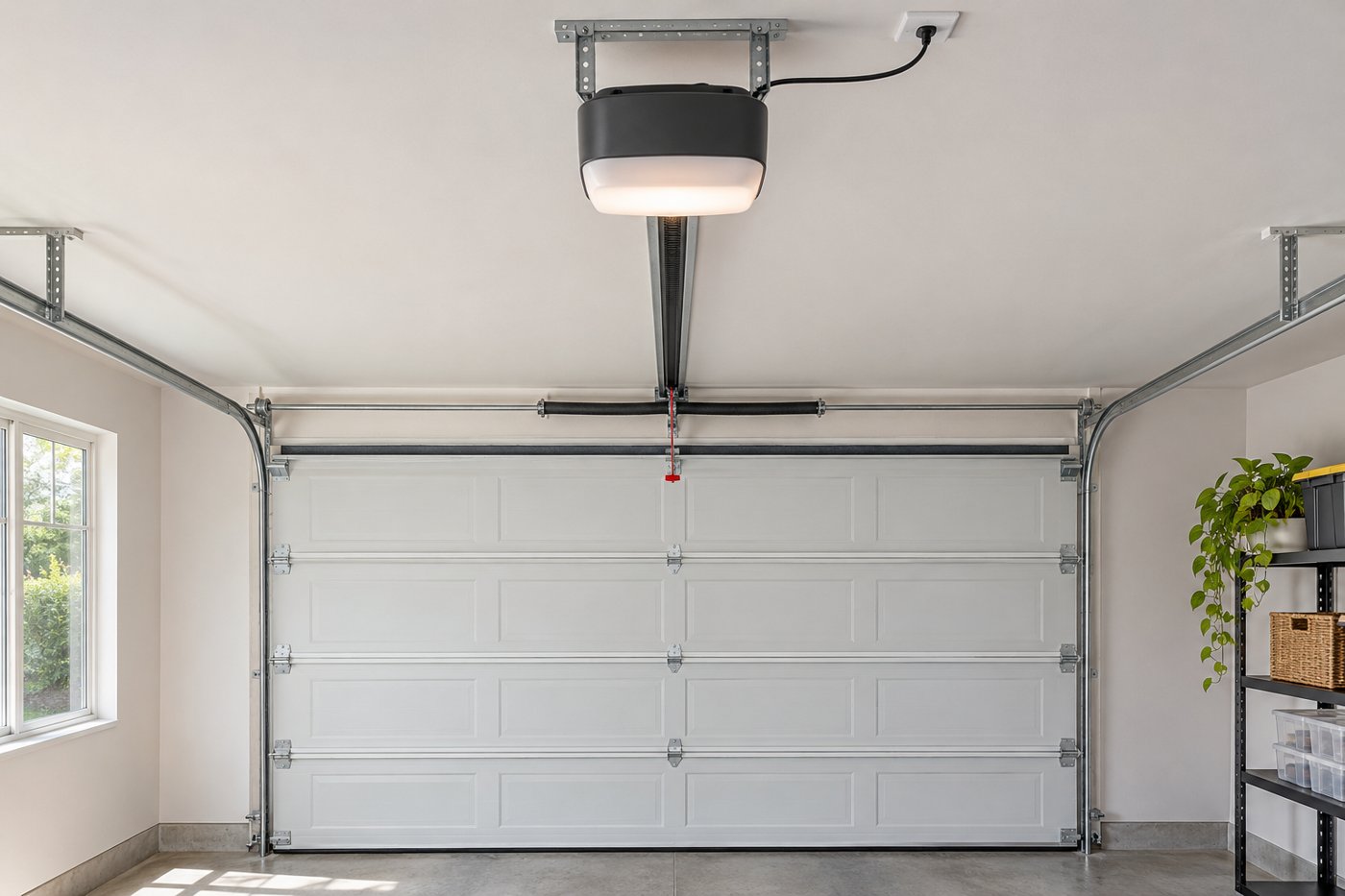
A wall-mounted unit may free overhead space but is not a universal conversion. A conventional rail needs room behind and above the door. Ceiling storage, beams and lights can complicate either arrangement, so the final choice needs measurement.
Separate convenient features from essentials
Remote control, keypad access and connected-app functions each have different setup requirements. Ask which controls are included, how old remotes will be removed from memory and who will own the connected account. Do not share private account credentials in a general inquiry.
Wi-Fi access and mechanical operation are separate. Understand what works locally when the internet is unavailable. If battery backup is part of the selected equipment, ask about its operation and maintenance rather than assuming it supplies unlimited use.
Plan power and mounting
A safe outlet and secure structural attachment are part of the planning discussion. Ask who handles any electrical changes and whether another trade is needed. An extension lead or a convenient nearby surface is not a substitute for the specified installation.
Rooms above the garage make vibration control worth discussing. Drive type is one factor; door rollers, fasteners and the building structure matter too. Diagnose existing noise so a new operator does not inherit the same unresolved problem.
Make the handover useful
The installer should explain controls, travel settings, safety sensors and emergency release use. Keep the model-specific manual and follow its safety-test procedure. Children should not operate or play with the controls, and the moving door must stay in sight.
If a safety test fails, stop normal automatic operation and arrange correction. Do not bypass the sensors or increase force in an attempt to make the door close. A working app notification is not evidence that the door’s safety system has been checked.
Applying this in Phoenix
In Phoenix and the supported surrounding ZIPs, note whether the opening faces strong afternoon sun and whether dust is present near the sensor path. Pinal-area coverage follows the exact ZIP list, so include the postal location at the beginning of the call.
Check the coverage directory and related service options. For a sudden heavy door, use the spring failure guide; for control symptoms, read sensor diagnosis.
Technical reading
DASMA garage-door system safety and CPSC opener safety guidance. Read the model-specific manual before any owner check.
A useful next step
Call with the door position, ZIP and observed symptom. Calls and repair requests are accepted 24/7; local scope and scheduling are confirmed by phone. Do not operate a visibly unstable door while gathering information.