
The question to settle first
A single symptom does not tell you to replace an entire door. Start by separating damage to a serviceable component from damage to the door assembly itself. A worn roller, a failed spring and a distorted panel affect different systems and call for different inspection questions.
Begin with garage door replacement when discussing this issue. This guide helps prepare that conversation.
First identify what changed
Write down the last normal cycle and the first abnormal one. Was there a sudden bang, an impact or a gradual increase in noise? Does the door remain square in the opening? Does the wall button behave differently from a remote? These observations narrow the conversation without pretending to establish a diagnosis remotely.
Keep the door out of service if it is crooked, a cable is loose or a section has come out of the track. Do not disconnect an unstable raised door or stand beneath it. A technician needs to control the load before investigating high-tension parts.
Compare the affected systems
| Condition | Assessment question | Likely discussion |
|---|---|---|
| One noisy roller or hinge | Are surrounding parts and track sound? | Component repair and maintenance |
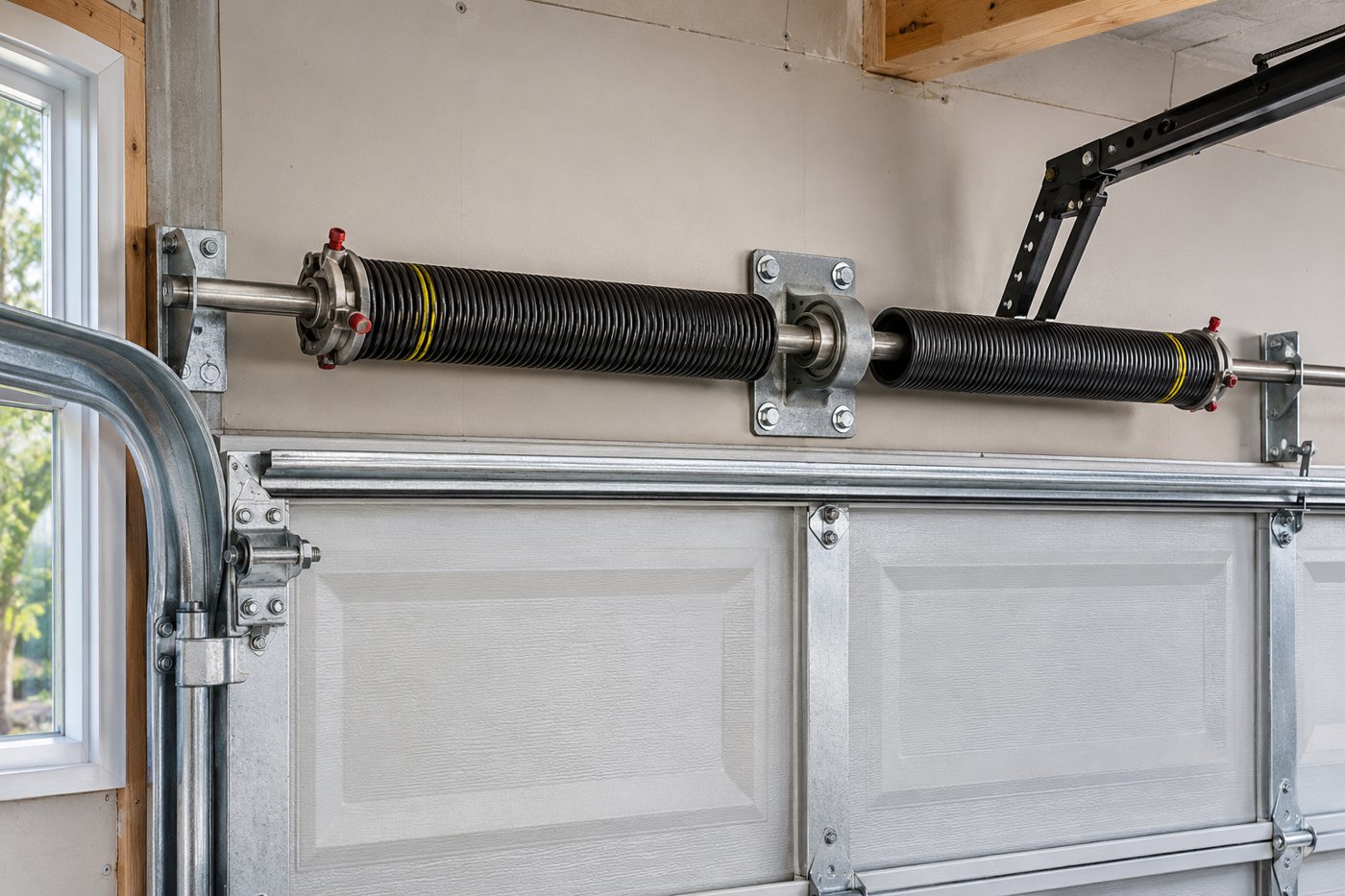
| Broken spring | Is the door otherwise serviceable and what spring specification fits? | Matched spring repair and balance |
| One damaged panel | Is an exact compatible section available? | Section repair versus replacement |
| Multiple bent or separating sections | Is the door structurally sound? | Whole-door replacement assessment |
| Motor/control fault | Does the door system operate correctly independent of controls? | Opener repair or replacement |
The table describes questions, not a predetermined repair. Age alone does not resolve the decision. Parts availability, actual damage and system compatibility are more useful than a blanket rule.
Keep the scope specific
Ask what component failed and what evidence supports that conclusion. For panel work, ask whether the exact series and joint profile are available. For spring work, ask how the door weight and balance will be established. For an opener, ask whether mechanical resistance has been ruled out before discussing a new drive.
An itemized scope should distinguish essential safety work, worn parts and optional changes. If the recommended work changes weight, mounting or travel, ask what additional compatibility checks are included. Reusing an old track is a manufacturer-specific decision, not an automatic saving or an automatic mistake.
Think beyond the first cycle
A door that opens once after a repair has not necessarily passed a complete handover. Discuss smooth full travel, proper balance, secure attachment and opener safety checks. Keep the model information and instructions so future maintenance is based on the actual equipment.
Appearance matters too, particularly on a street-facing garage. A replacement panel may differ in finish from weathered panels. Discuss that possibility before deciding whether one section or the whole door should be replaced. A finish difference is separate from structural compatibility.
Prepare for the call
Have your postal ZIP, door type, current position and safely accessible model details ready. Explain whether the garage is the only entrance and whether a vehicle is inside. Keep children, pets and bystanders away from the opening. Never improvise a prop or use the opener to force an obstruction.
Applying this in Phoenix
In Phoenix and the supported surrounding ZIPs, note whether the opening faces strong afternoon sun and whether dust is present near the sensor path. Pinal-area coverage follows the exact ZIP list, so include the postal location at the beginning of the call.
Check the coverage directory and related service options. For a sudden heavy door, use the spring failure guide; for control symptoms, read sensor diagnosis.
Technical reading
DASMA garage-door system safety and CPSC opener safety guidance. Read the model-specific manual before any owner check.
A useful next step
Call with the door position, ZIP and observed symptom. Calls and repair requests are accepted 24/7; local scope and scheduling are confirmed by phone. Do not operate a visibly unstable door while gathering information.